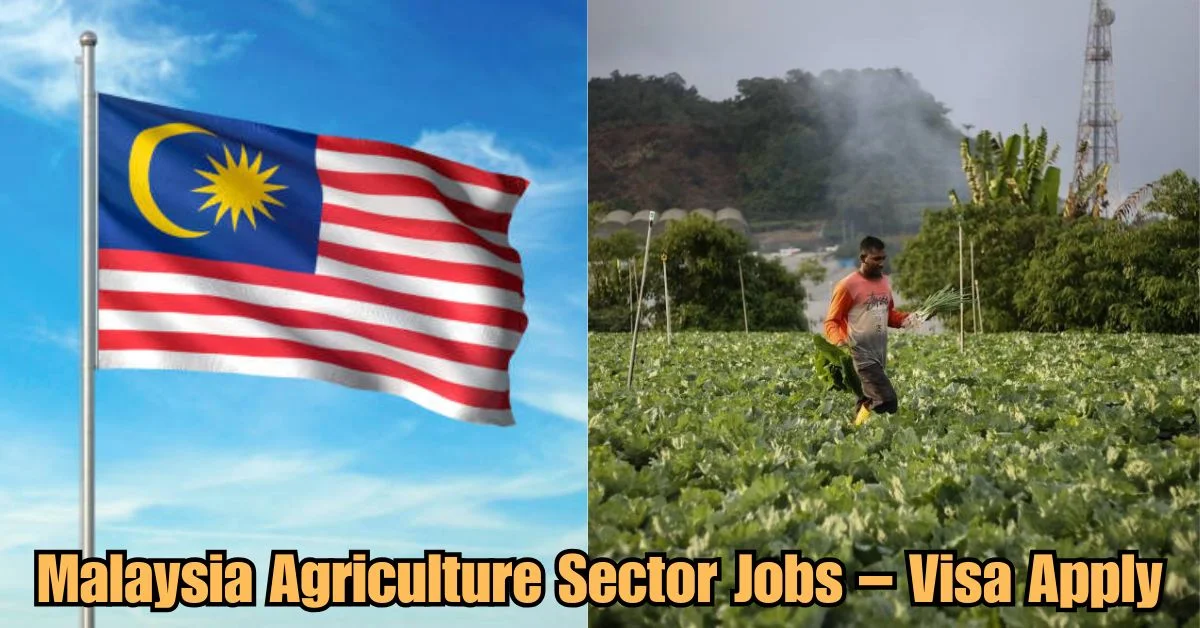
Malaysia’s agriculture sector continues to play a vital role in the country’s economy, contributing significantly to exports, food security, and rural employment. In 2026, Malaysia faces persistent labor shortages in agricultural and plantation work due to declining local participation and increased demand driven by palm oil production, fruit farming, food processing, and agro-based industries. As a result, the Malaysian government actively allows foreign workers to fill agriculture sector jobs through regulated visa and work permit systems. However, working legally in Malaysia’s agriculture sector requires understanding the correct visa type, employer sponsorship rules, work permit procedures, and compliance obligations. This comprehensive guide explains how foreign nationals can apply for agriculture sector jobs in Malaysia, what visa options are available in 2026, who is eligible, how the application process works, and what workers must know to stay legally employed in Malaysia.
Table of Contents
- Overview of Malaysia’s Agriculture Sector in 2026
- Why Malaysia Needs Foreign Agricultural Workers
- Types of Agriculture Sector Jobs Available
- Plantation and Estate Work Opportunities
- Farming, Livestock, and Food Production Jobs
- Agro-Processing and Seasonal Agriculture Roles
- Visa Options for Agriculture Sector Workers
- Work Permit and Employer Sponsorship Requirements
- Eligibility Criteria for Foreign Workers
- Salary, Working Conditions, and Labor Protections
- Application Process: Step-by-Step
- Duration, Renewal, and Job Restrictions
- Common Mistakes and Legal Risks
- Final Advice and Application Checklist
1. Overview of Malaysia’s Agriculture Sector in 2026
Malaysia’s agriculture sector includes plantation agriculture, food crop farming, livestock rearing, fisheries, and agro-processing. Palm oil plantations, rubber estates, fruit farms, and vegetable production continue to dominate employment demand. In 2026, the sector remains heavily dependent on foreign labor due to physically demanding work conditions and long-term shortages of local workers willing to take up agricultural jobs.
To ensure continuity in food production and exports, Malaysia regulates foreign labor entry strictly through sector-specific work permits, making agriculture one of the legally approved industries for foreign employment.
2. Why Malaysia Needs Foreign Agricultural Workers
Malaysia’s reliance on foreign agricultural workers is driven by several structural factors. Younger Malaysians increasingly seek employment in urban and service-based sectors, leaving rural agricultural roles understaffed. At the same time, large-scale plantations and farms require consistent manpower to maintain productivity.
In response, the Malaysian government authorizes employers in the agriculture sector to recruit foreign workers under controlled visa schemes, ensuring both economic sustainability and worker protection.
3. Types of Agriculture Sector Jobs Available
Foreign workers in Malaysia’s agriculture sector typically fill manual, semi-skilled, and seasonal roles. These jobs are essential for daily farm operations and are legally open to foreign nationals under approved programs.
Common job categories include:
- Plantation laborers
- Farm workers and harvesters
- Livestock attendants
- Nursery and greenhouse workers
- Food crop processing staff
Employment is usually employer-specific and location-specific.
4. Plantation and Estate Work Opportunities
Plantation work is the largest employer of foreign labor in Malaysia’s agriculture sector. Palm oil, rubber, and cocoa plantations employ thousands of foreign workers annually.
Typical plantation roles include:
- Harvesting and collection
- Field maintenance
- Fertilizer application
- Nursery management
These roles are physically demanding and often involve long hours outdoors, but they provide stable employment under legally regulated conditions.
5. Farming, Livestock, and Food Production Jobs
Beyond plantations, foreign workers are also employed in food-based agriculture such as:
- Vegetable and fruit farming
- Poultry and livestock farming
- Dairy production
- Aquaculture support roles
These jobs may be seasonal or year-round depending on production cycles. Employers must obtain approval to hire foreign labor before recruitment.
6. Agro-Processing and Seasonal Agriculture Roles
Agro-processing facilities connected to agriculture also employ foreign workers. These roles involve:
- Sorting and packaging produce
- Food processing and handling
- Cold storage operations
- Quality control support
Seasonal employment spikes occur during harvest periods, making temporary work permits especially relevant in 2026.
7. Visa Options for Agriculture Sector Workers
Malaysia does not issue an agriculture-specific visa name, but foreign workers are legally employed through:
- Temporary Employment Pass (Pas Lawatan Kerja Sementara – PLKS)
- Sector-approved foreign worker permits
Tourist visas do not allow employment. Entry for agriculture work is strictly regulated and tied to employer sponsorship.
8. Work Permit and Employer Sponsorship Requirements
Employer sponsorship is mandatory. Agricultural employers must:
- Be registered with Malaysian labor authorities
- Receive approval to hire foreign workers
- Issue a formal employment contract
- Apply for work permits on behalf of workers
The worker’s legal status remains tied to the sponsoring employer throughout employment.
9. Eligibility Criteria for Foreign Workers
Eligibility requirements typically include:
- Valid passport
- Approval from Malaysian labor authorities
- Medical examination clearance
- Security and background checks
- Compliance with nationality quotas
Foreign agricultural workers are often recruited from approved source countries under bilateral agreements.
10. Salary, Working Conditions, and Labor Protections
Foreign workers in Malaysia’s agriculture sector are protected under national labor laws. Employers must comply with:
- Minimum wage regulations
- Working hour limits
- Rest days and leave provisions
- Workplace safety requirements
Wages vary by region, job type, and experience, but payment must meet legally defined minimum standards.
11. Application Process: Step-by-Step
The general process for applying to work in Malaysia’s agriculture sector includes:
- Employer receives approval to hire foreign workers
- Recruitment through authorized channels
- Submission of visa and work permit application
- Medical examination and security screening
- Entry into Malaysia
- Issuance of Temporary Employment Pass
Workers cannot legally begin work until permits are issued.
12. Duration, Renewal, and Job Restrictions
Agriculture sector work permits are:
- Time-limited, usually issued for 1 year
- Renewable, subject to employer approval
- Job-specific, no change of employer allowed
Changing employers or sectors requires a new permit application.
13. Common Mistakes and Legal Risks
Foreign workers often face problems due to:
- Working on tourist visas
- Accepting jobs without permits
- Changing employers illegally
- Overstaying after permit expiry
Malaysia enforces immigration laws strictly, and violations can result in detention, fines, or deportation.
14. Final Advice and Application Checklist
Malaysia agriculture sector jobs offer legal employment opportunities for foreign workers in 2026, but only through approved visa and work permit frameworks. Workers should rely on authorized employers, understand permit limitations, and ensure full compliance with Malaysian labor and immigration laws.